
I originally wrote this in Chinese, my first language, and adapted it into English myself. If a line reads a little off, please bear with me, and I'd genuinely appreciate a quick note at support@sentiaread.com.
How SentiaRead came to life
and where I plan to take it from here
I'm Kevin, the developer behind SentiaRead. I finally worked up the courage to put my real photo out there.
I'm pretty introverted by nature, and putting my face on the open internet has never come easily to me. I rarely post photos of myself even on my own social accounts. I had to dig through old photos for a while before I found this one, which a close friend took on a trip to Japan years ago.
In Western indie developer circles, using your own photo as an avatar is standard practice. Over time, I came to understand why: at the heart of it, it comes down to trust.
So I wanted to take this chance to introduce myself and share the story of how SentiaRead came to be.

At the end of 2023, I was caught in a company-wide layoff
By 2024, I was home full-time, looking after our two young kids while trying to figure out how to make a living.
With two little ones and no family nearby who could help out regularly, my wife couldn't manage everything alone. Raising them had to be a two-person job.
The first year went reasonably well.
A former co-founder from my startup days reached out with freelance work. I took on three custom development projects, and the income was solid. Daily life was hectic, but at least the cash flow didn't keep me up at night.
In the first half of 2025, things shifted. His startup was gaining traction, so he was taking on fewer outside projects, and before long, the contract work dried up.
During that stretch, I still hadn't found a product I genuinely wanted to commit to for the long haul. With no steady income and no clear next step, the financial anxiety started creeping in.
Lots of experimenting, and then SentiaRead
Around the second half of 2025, I went into a stretch of nonstop tinkering.
I built several small apps. Some never even made it to a public launch. I also started posting regularly on social media, hoping to sharpen my communication skills, get myself in front of more people, and maybe open up some new opportunities.
Along the way, I noticed something: whenever I shared notes about learning English, those posts consistently did well.
They came straight from years of learning English myself: the mistakes, the dead ends, and the lessons learned. As I shared more, the audience steadily grew.
I began to wonder: why not take my own learning experience and real pain points and build a product around them?
At the very least, it would solve a problem I wrestled with every day. If it happened to help others facing the same struggles, even better.
And honestly, I didn't have a clearer way to make a living at the time.
So I started building SentiaRead.
What I wanted to create was a reading tool built specifically for English learners: one that helps you understand words in context, breaks down complex sentences without pulling you out of the text, and keeps you immersed in English rather than dumping everything into translation. In short, I wanted to remove the constant friction that makes reading in English exhausting, and so easy to give up on.
Three months to build the MVP, three more in private beta
Looking back, I started coding SentiaRead over China's National Day holiday in October 2025. Finishing the first MVP took about three months.
I then invited over 200 users into a private beta, polishing and iterating for another three months based on their feedback before I felt it was ready for a public release.
In the six months since launch, I've received an incredible amount of encouragement, constructive feedback, and support. SentiaRead has expanded across more platforms, added richer reading and listening capabilities, and steadily improved.
Yet behind the scenes, this journey has been anything but smooth.
Every first-time payment gave me a spark of hope
Building an independent product puts you on an emotional rollercoaster. When growth stalls, you get anxious; when the revenue doesn't come in, you start second-guessing yourself.
But every time a complete stranger paid for SentiaRead for the first time, it made my day. It meant someone had used the product, found real value in it, and decided it was worth their hard-earned money.
Moments like that made me think: maybe this really can work.
Even so, I still hadn't figured out where to put my focus. For a while, I also tried creating AI-focused social media content: chasing trends, writing articles, analyzing algorithms. It made a little money, but not much, and it was draining.
After a few months, I found myself in an uncomfortable spot: neither the content nor the product was really taking off. I was pouring energy into both and getting mediocre results from both.
In August 2026, I finally got clarity
By August 2026, SentiaRead's revenue still couldn't cover our household expenses, but one thing had become clear:
People kept paying for it, and paying users kept reaching out to tell me how much it genuinely helped them read. That convinced me this product had a real shot. What was holding it back was mostly my own marketing bandwidth, and the time and energy I could afford to give it.
So in early August, things clicked for me.
Spreading my attention across too many things would only guarantee that everything ended up half-baked, especially for a solo indie developer who spends a large chunk of every day parenting.
Even with the income anxiety still hanging over me, I hired a weekly housekeeper to buy back some time, and put every spare hour into SentiaRead and its growth.
The good news is that after a month of focused work in August, it started paying off. Seeing more learners from Europe, North America, Australia, and Asia download, install, and use the app has been deeply rewarding.
“You're not going to disappear on us, are you?”
As an engineer, I used to spend almost all my time on architecture, UI details, and performance optimization. But once I started selling a product of my own, I learned something fundamental: business comes down to exchanging value and providing a service, and both depend on trust.
Even when the product fits their needs, people wonder: Will this app still be maintained next year? Is the service reliable? If something breaks, can I reach a real human? Will the developer vanish after I pay?
A few paying users have asked me, half-jokingly: “You're not going to take the money and run, right?” In the end, they chose to trust me and became lifetime members.
The ones who asked were at least talking to me. Many more people find SentiaRead on their own and quietly wonder the same thing without ever saying so.
Trust like that isn't earned with a tagline.
It takes time, consistent shipping, open sharing, and showing people who's actually behind the screen. That's one of the main reasons I decided to put my real photo on the product.
I'm working on SentiaRead full-time
My daily routine is simple: take care of the kids, iterate on SentiaRead, and share the journey. I'm confident I can keep making SentiaRead better.
I don't have plans to start anything else anytime soon, and I'm not going to chase trends for clicks. I want to build a great product, share what I learn along the way, stay in touch with our users, and grow together.
If you read in English regularly to improve your language skills, or simply want a smoother tool to help you understand English with less effort, I'd love for you to give SentiaRead a try.
People sometimes ask how it's different from a regular translation extension. If you're actively learning English, a few minutes with it should make the difference obvious.
To everyone who has tried SentiaRead, shared feedback, recommended it to friends, or supported it with a subscription: thank you. Your support means the world to a solo indie developer juggling kids and code. If you ever have a question or just want to chat, reach out anytime: DM me on X or drop me an email at support@sentiaread.com.
While building SentiaRead, many of my core product decisions grew out of the second language acquisition research and extensive reading principles I discovered when learning English myself. Here are a few studies and videos that reshaped my thinking, in case they help you too:
The Input Hypothesis (i+1)
Stephen Krashen (Professor Emeritus, USC)·Principles and Practice in Second Language Acquisition (1982)
Krashen argues that language is acquired by understanding messages containing structures slightly beyond our current competence (i+1), aided by context. He also points out that there's no need to deliberately hunt for i+1 material; when input is comprehensible and there's enough of it, i+1 shows up on its own. For pleasure reading, he sets just two conditions: the text must be comprehensible, and the reader must be genuinely interested in the topic. This is why SentiaRead focuses on helping you read what you love first, then explaining unfamiliar vocabulary and sentences at your level.[1]
(2) We acquire by understanding language that contains structure a bit beyond our current level of competence (i + 1). This is done with the help of context or extra-linguistic information. … this implies that the best input should not even attempt to deliberately aim at i + 1. … (3) When communication is successful, when the input is understood and there is enough of it, i + 1 will be provided automatically.The only requirement is that the story or main idea be comprehensible and that the topic be something the student is genuinely interested in, that he would read in his first language.Incidental Vocabulary Learning from Context
Paul Nation (Emeritus Professor of Applied Linguistics, Victoria University of Wellington)·Learning Vocabulary in Another Language (2001; 2nd ed. 2013)
Nation identifies incidental learning from context while listening and reading as the single most important source of vocabulary growth. However, he stresses that learning a word is a gradual process: each encounter adds only a small, fragile piece of knowledge that will be lost unless reinforced soon. Estimates of how many encounters it takes range from 6 to more than 20, with Nation suggesting at least 10. That's why SentiaRead subtly highlights words you've looked up before in any article you read later, letting you meet them again in a fresh context before you forget.[2]
Incidental learning from guessing the meanings of words from context through listening and reading is the most important of all the sources of vocabulary learning.… this vocabulary learning is not an all-or-nothing piece of learning for any particular word, but that it is a gradual process of one meeting with a word adding to or strengthening the small amounts of knowledge gained from previous meetings. … Essentially, vocabulary learning from extensive reading is very fragile. If the small amount of learning of a word is not soon reinforced by another meeting, then that learning will be lost.Top Ten Principles for Extensive Reading
Richard Day (University of Hawaii) & Julian Bamford (Bunkyo University)·Reading in a Foreign Language, 14(2) (2002)
Day and Bamford outlined ten foundational principles: reading materials should be easy; a wide variety of topics must be available; learners choose what they read; they read as much as possible; the purpose is pleasure, information, and general understanding; reading is its own reward; reading speed is usually faster rather than slower; reading is individual and silent; teachers guide rather than test; and the teacher is a role model. These were written as teaching guidelines rather than research findings, but every single one lines up with my own experience reading in English.[3]
1. The reading material is easy. 2. A variety of reading material on a wide range of topics must be available. 3. Learners choose what they want to read. 4. Learners read as much as possible. 5. The purpose of reading is usually related to pleasure, information and general understanding. 6. Reading is its own reward. 7. Reading speed is usually faster rather than slower. 8. Reading is individual and silent. 9. Teachers orient and guide their students. 10. The teacher is a role model of a reader.References
- [1]Krashen, S. D. (1982). Principles and Practice in Second Language Acquisition. Oxford: Pergamon Press. Ch. II §C “The Input Hypothesis”; Ch. V “Pleasure reading”. sdkrashen.com (PDF, 2009 Internet Edition)
- [2]Nation, I. S. P. (2013). Learning Vocabulary in Another Language (2nd ed.). Cambridge: Cambridge University Press. pp. 119, 212, 257-258. First edition 2001, Ch. 9 “Learning words from context”. cambridge.org
- [3]Day, R. R., & Bamford, J. (2002). Top ten principles for teaching extensive reading. Reading in a Foreign Language, 14(2), 136-141. nflrc.hawaii.edu (open access)
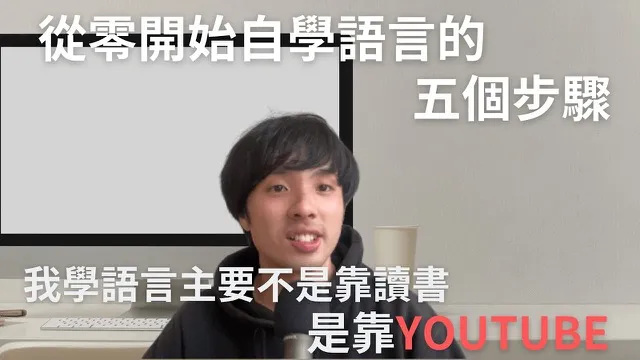
It's no exaggeration to say these videos completely changed how I think about learning English. They explain these ideas remarkably well. If you haven't come across them before, I'd highly recommend setting aside some time to watch. I'm confident they'll give you a fresh perspective.












Build the habit slowly. Notice the change day by day.
That's how language acquisition works: read more, listen more, and use it in context. Spend a little time each day building your own reading routine, and over time, understanding English will become second nature.