After Neglecting English for Over a Decade, Here Is How I Stuck with It for 4 Years

The hardest part of learning English is not starting, but not quitting after two weeks. Here is how I turned English reading into a daily habit over the past 4 years.
Translated from the original Chinese and reviewed by the author. Read the original (Chinese)
After barely touching English for more than ten years, I picked it back up in 2022 and have somehow kept at it for over four years now.
Over these four years, I have become more and more convinced that before worrying about study methods, you have to solve a more fundamental problem: how to keep going. Taking the first step is not that hard. The hard part is not quitting two weeks later.
I used to be stuck in the same cycle as everyone else. Every few months I would make a grand resolution to "finally master English this time," buy a thick grammar book, and download a flashcard app to check in daily. Week one was full of energy, week two felt like a chore, and I rarely lasted past day fourteen. Every time I quit, the self-doubt crept in: do I just have terrible willpower, a bad memory, or zero talent for languages?
Looking back after four years of actually sticking with it, I did not suddenly become a model of self-discipline. What changed was getting a few simple things right. Here is what worked for me, in case it helps you too.
1. Find a Concrete Reason You Actually Care About
I put this first for a reason. Your motivation needs to be specific and personal, because the human brain naturally avoids effort. Without a real reason, the first sign of friction will make you want to put it down.
When I picked English back up, my reason was very practical: I wanted to explore business opportunities outside my home market, and I wanted to read first-hand technical posts and see what indie developers around the world were building without waiting for translations. That specific goal has kept me going ever since. Finding the real reason that matters to you beats any streak-tracking trick.
2. Build the Habit First, Worry About Progress Later
When you are just starting again, do not set your goal as "getting really good at English." Set it as "building the habit of touching English every day."
Pick a format you enjoy and stick with it for 5 to 10 minutes a day. In the beginning, "I showed up today" matters way more than "how long I studied today."
It also helps to give yourself plenty of credit along the way. When you hit 7 days, a month, three months, or finish your very first short English book, give yourself a small reward and pat yourself on the back. Positive feedback is what keeps us going. Once the daily habit feels completely automatic, you can gradually read for longer or branch out into harder material.
3. Drop the Perfectionism and Make Reading Low-Pressure
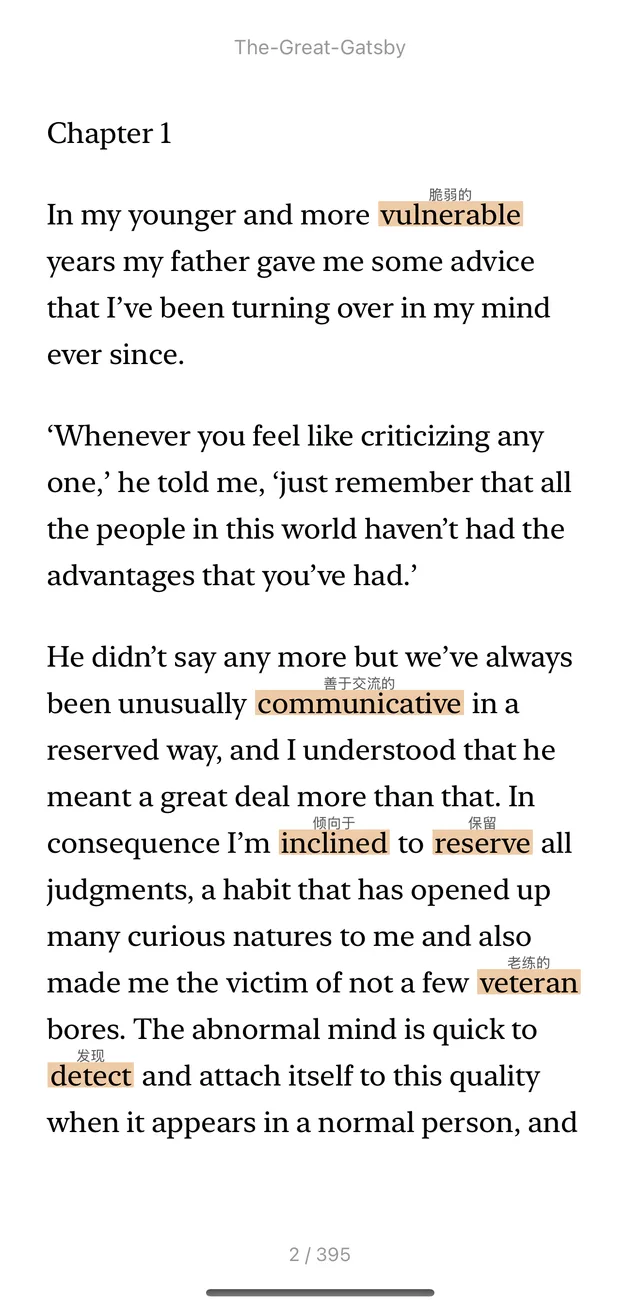
Why did my earlier attempts at reading English always fizzle out? Before I tried LingQ, every time I tried reading an English book or article, I quit halfway through for one main reason: looking up words kept breaking my train of thought.
Whenever I ran into unfamiliar words, my perfectionist instinct told me I had to look up every single one. So I would jump out to a dictionary app, wade through half a dozen definitions to guess which one fit, and by the time I switched back to the book, I had completely lost the thread of the story. Looking up a dozen words across two pages was slow and exhausting. No wonder I could not keep it up.
Later, I made two changes:
First, I let go of the urge to understand every single word. As long as I could follow the main idea of the passage, I let unfamiliar words slide and only looked up the ones that actually blocked my understanding.
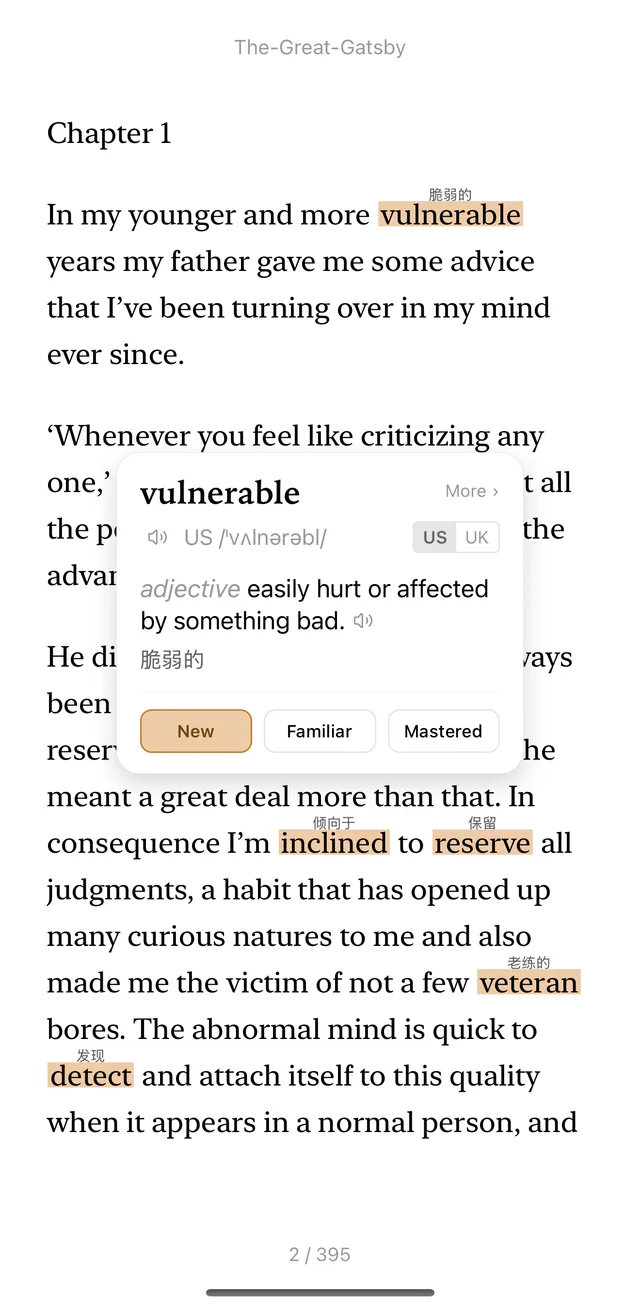
Second, I got rid of the lookup friction altogether. Last year I built SentiaRead specifically to fix my own reading headaches: when I hit a word I do not know, I tap it once, and AI reads the surrounding sentence to give me the single most fitting meaning in simple English at my level. If that is still not clear, one more tap shows a native-language gloss.
Once looking up a word no longer meant switching apps or guessing between dictionary definitions, the friction dropped right away. Reading English for 10 minutes a day went from a chore to something easy and genuinely enjoyable.
4. Missing a Day or Two Is Completely Fine
Life happens. Work gets crazy, family needs your attention, or something unexpected comes up. Missing a day or two here and there is completely normal.
In the past, missing a single day made me think, "Well, my streak is broken, this run is ruined," and I would just give up entirely. That is why, when I designed the reading stats and daily goals in SentiaRead, I deliberately avoided punishing you for a missed day. Your reading calendar, overall trends, and best records all stay intact so you can see how far you have come over time, instead of stressing over a broken streak.
If you miss a day, you miss a day. Just pick your book back up tomorrow and read for a few minutes. When you choose a comfortable, low-pressure way to read, learning English stops feeling like a grind and quietly becomes part of your everyday routine. If you want to see how I naturally pick up vocabulary during my daily reading, check out The Most Effective Way to Grow Your English Vocabulary.