How I Use Podcasts to Learn English Effectively

Translated from the original Chinese and reviewed by the author. Read the original (Chinese)
I want to share a routine I have been using for a long time to grow my vocabulary, sharpen my listening, and build a natural feel for English through podcasts. It has worked really well for me, it is easy to fit into daily life, and it is simple enough to stick with. This post takes a few minutes to read, but if you want to get more out of English podcasts, it is well worth your time.
Start by picking a podcast you actually care about that matches your current English level. Aim for episodes around 10 minutes long, and try to keep them under 20 minutes. Shorter episodes are much easier to revisit without feeling overwhelming.
I highly recommend the BBC Learning English shows, such as 6 Minute English, Learning Easy English, Learning English Conversations, Learning English for Work, and Learning English from the News. They cover a wide range of topics, from everyday conversations and workplace communication to news stories and interesting questions.
I plan to put together a dedicated BBC Learning English collection inside SentiaRead soon so these shows are even easier to browse. For now, you can find them right away by typing "BBC" into the podcast search bar.
Here is the five-step routine I follow.
Step 1: Listen once without subtitles
Pick an episode and listen to it straight through in player mode with the subtitles turned off. Just see how much of the conversation you can follow on your own.
There are plenty of words we recognize right away on the page, yet miss completely in real conversation. Maybe we have not heard them spoken often enough, or maybe the speaker talks fast and links words together.
Listening without subtitles first lets you rely on what you hear and the surrounding context to piece the meaning together, and it shows you how much you actually catch on the first pass.
Step 2: Read the full transcript like an article
Once you finish the first listen, tap "Read transcript" on the episode.
SentiaRead can automatically transcribe podcast audio, so even if the host did not provide a transcript, you can still generate the full text.
In reading mode, go through the transcript carefully, just as you would with a book or an article.
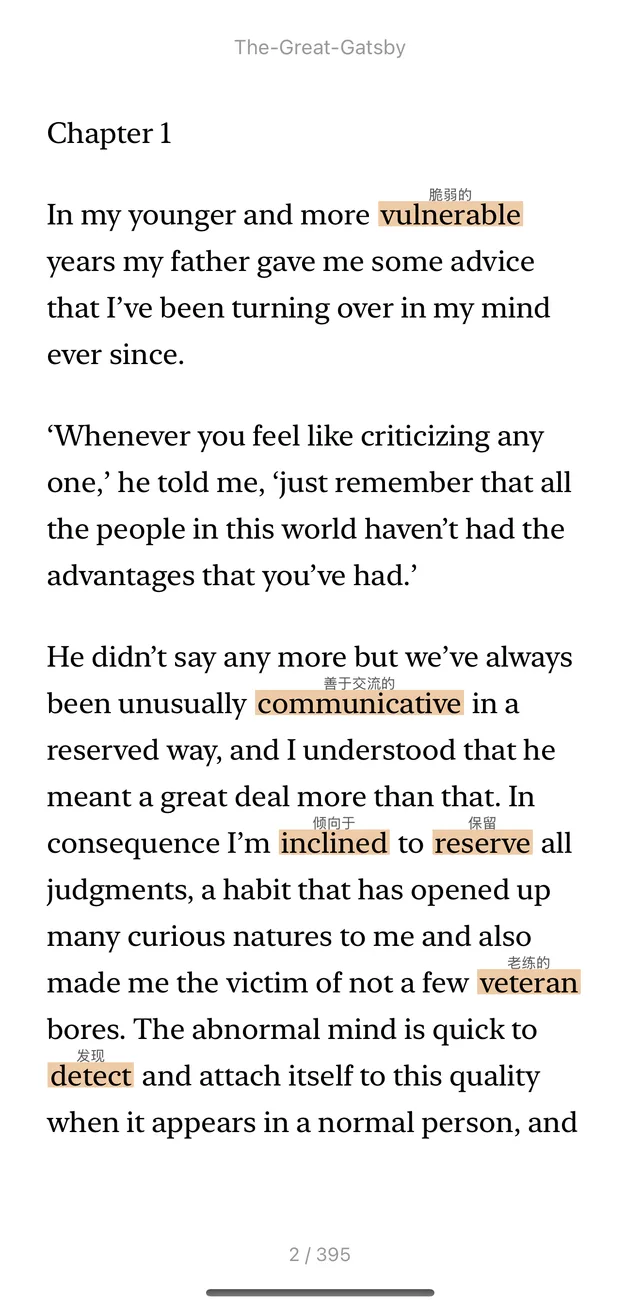
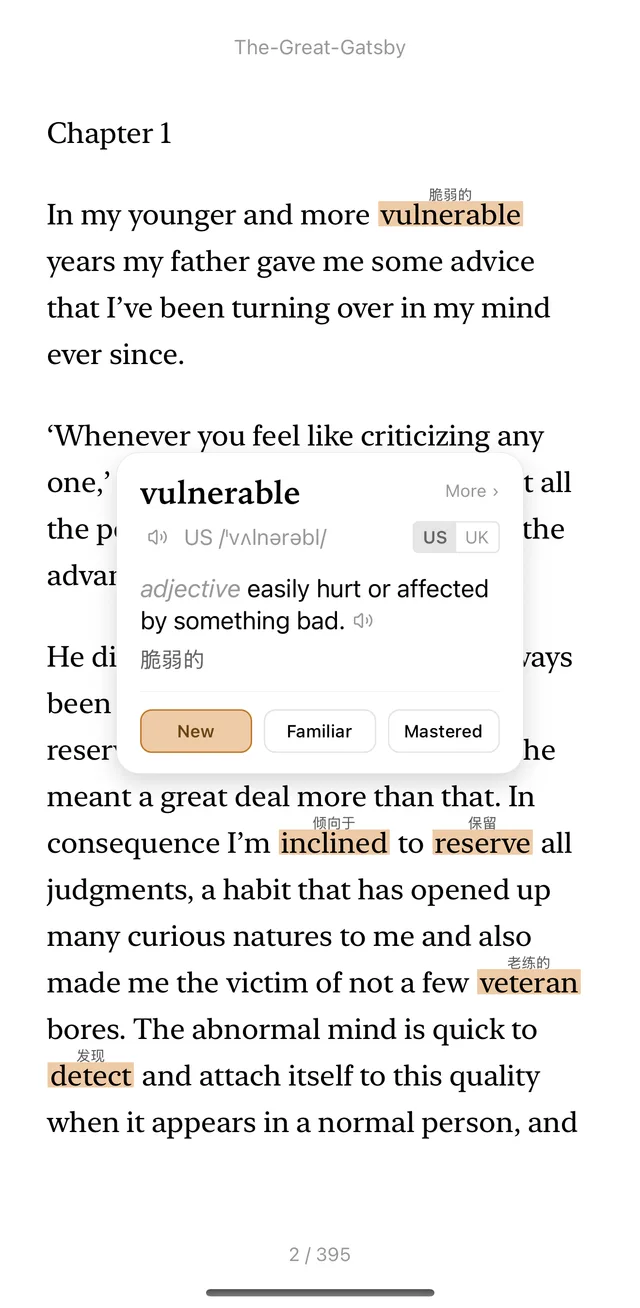
Whenever you run into an unfamiliar word or phrase, tap it to see what it means in that exact sentence, and save the ones worth keeping to your vocabulary list. If you hit a sentence whose structure trips you up, let the AI explain it so you can make sense of what it is saying.
Podcast transcripts are fantastic study material because they are packed with natural, everyday spoken English. You will often spot familiar words being used in ways you rarely see in formal writing.
There is no need to rush through this step. Take your time to understand the whole episode and collect useful words and expressions along the way.
Step 3: Close the transcript and listen again without subtitles
Now switch back to player mode, keep the subtitles off, and listen to the whole episode a second time.
You will usually notice a clear difference right away. On the first listen, whole stretches may have sounded blurry, or you might have lost the thread completely. After reading the transcript, clearing up the new words, and untangling the tricky sentences, those same parts suddenly come into focus.
Words you just looked up a few minutes ago start jumping out at you as you listen.
Step 4: Listen with synced subtitles and review words in context
Next, turn on synced subtitles in player mode and follow the lines while you listen.
There is one feature here that makes this step especially smooth.
Because you already read the transcript in Step 2 and saved the unfamiliar words to your vocabulary list, turning on "Inline Meaning" displays a short gloss right above those saved words in the subtitles.
When a word you just learned comes up in the audio, a quick glance at the subtitle reminds you of its meaning on the spot.
You can keep listening from start to finish without constantly pausing to look up words or check meanings, so your listening flow stays intact.
Since you already know what the episode is about, following the synced subtitles makes it much easier for your brain to connect the spoken sound, the written word, and the meaning all at once.
This step also helps you get used to how natural English is phrased, training your brain to process English directly and building your intuition for the language.
Step 5: Re-listen to the same episode in spare moments
From here on, you can turn the subtitles back off and listen to the episode a few more times whenever it suits you.
Put it on while walking, driving, or doing chores around the house.
Because you already understand the episode inside out, your brain can recognize the words, phrases, and sentences with far less effort each time they come around.
To me, this is where the whole routine really pays off.
Think about what happens to a single new word: you understand it once while reading the transcript, hear it again during your second blind listen, review it in context while following the synced subtitles, and then run into it several more times as you re-listen over the next few days.
Meeting the same word repeatedly inside a real conversation does far more for comprehension and long-term memory than drilling isolated flashcards ever could.
And with every repeat listen, those sounds and phrasing patterns become more familiar. Lines that took real effort to decode at first gradually become effortless to follow.
The next time you hear a similar expression somewhere else, you will catch it right away.
In my experience, taking one podcast episode at the right level and listening to it and reading it until you truly know it inside out is much more valuable than rushing through a new episode every day.
Of course, you can mix both approaches depending on your level and habits: listen broadly to shows you enjoy, and pick out the best episodes for this deeper listening and reading routine. At the beginner and intermediate stages, though, going deep on a single episode matters most. As your level improves, you can branch out into more shows to get comfortable with different voices, topics, speaking speeds, and accents.
Another big reason I love this routine is how light it feels.
All it takes is a ten-minute episode. By pairing reading mode with player mode in SentiaRead, you bring vocabulary building, reading comprehension, and listening practice together in one place.
You can revisit the audio in spare moments throughout the day, and the words you save to your vocabulary list will automatically highlight when you meet them again in future articles, books, and podcast episodes.
I have always believed that the heart of learning English is plenty of comprehensible input combined with repeated encounters in real context.
As the pool of words and expressions you know well keeps growing, processing English takes less and less effort, and both your listening and your feel for the language improve naturally along the way.
SentiaRead is a product I use and refine every single day, built around comprehensible input and what I have learned from my own English journey. Give it a try, and if you ever have questions, suggestions, or thoughts on learning English you would like to share, feel free to reach out anytime.